Skip to content
CNC Programming Hub
  • Home
  • Beginner Guides
  • G-Code & M-Code
  • Machine-Specific
  • Tutorials
  • Resources & Libraries
CNC Programming Hub
  • Comprehensive Guide to Fanuc Subprogramming (M98 and M99)
    Machine-Specific

    Comprehensive Guide to Fanuc Subprogramming (M98 and M99)

    ByCNC Hub Team January 15, 2026January 15, 2026

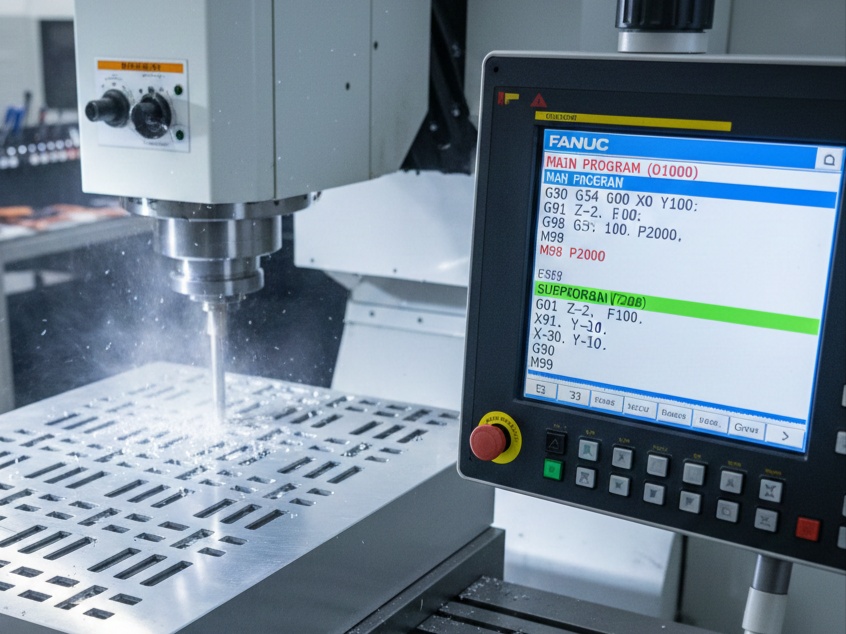
    In CNC programming, efficiency is the difference between a profitable job and a wasted shift. When a part requires repetitive features—such as multiple holes, slots, or pockets—writing the same code over and over is inefficient and prone to errors. This is where Subprogramming comes in. By using the M98 and M99 codes, you can write…
    Read More Comprehensive Guide to Fanuc Subprogramming (M98 and M99)Continue

  • Fanuc G-Code Example for Drilling, Tapping, and Boring
    Machine-Specific

    Fanuc G-Code Example for Drilling, Tapping, and Boring

    ByCNC Hub Team January 15, 2026January 18, 2026

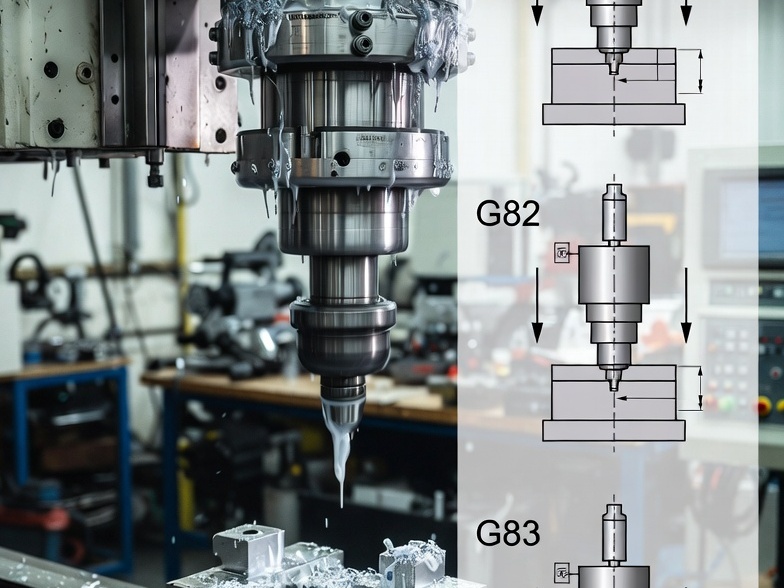
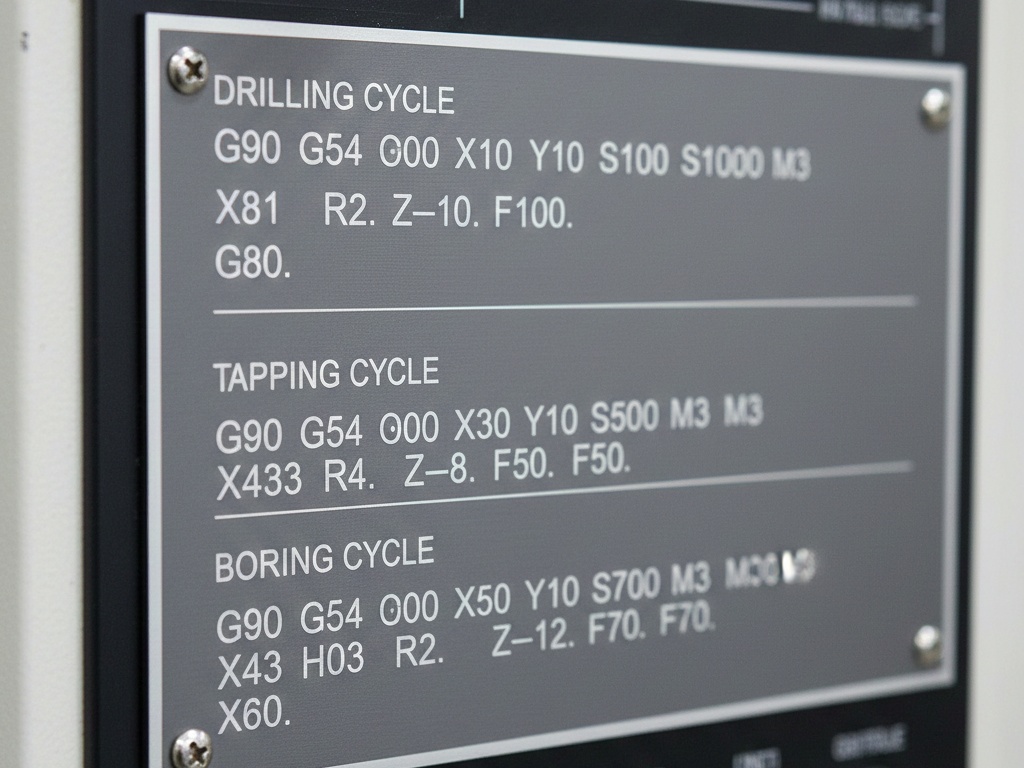
    Fanuc CNC controls are widely used in machining centers across the world due to their reliability, flexibility, and industry acceptance. Among the most common machining operations performed on Fanuc-controlled CNC machines are drilling, tapping, and boring. These operations are essential for producing accurate holes, threads, and precise internal dimensions in metal and plastic components. We…

    Read More Fanuc G-Code Example for Drilling, Tapping, and BoringContinue

  • G00, G01, G02, G03 Explained With Examples
    G-Code & M-Code

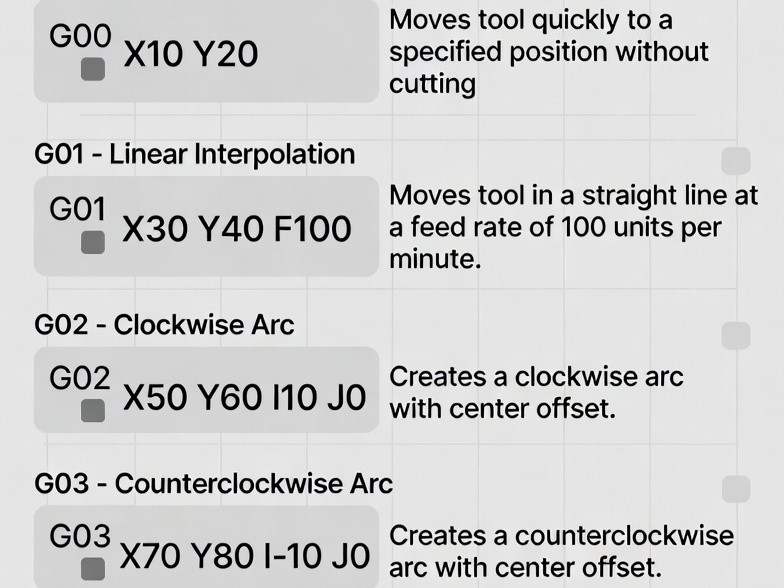
    G00, G01, G02, G03 Explained With Examples

    ByCNC Hub Team January 14, 2026January 14, 2026

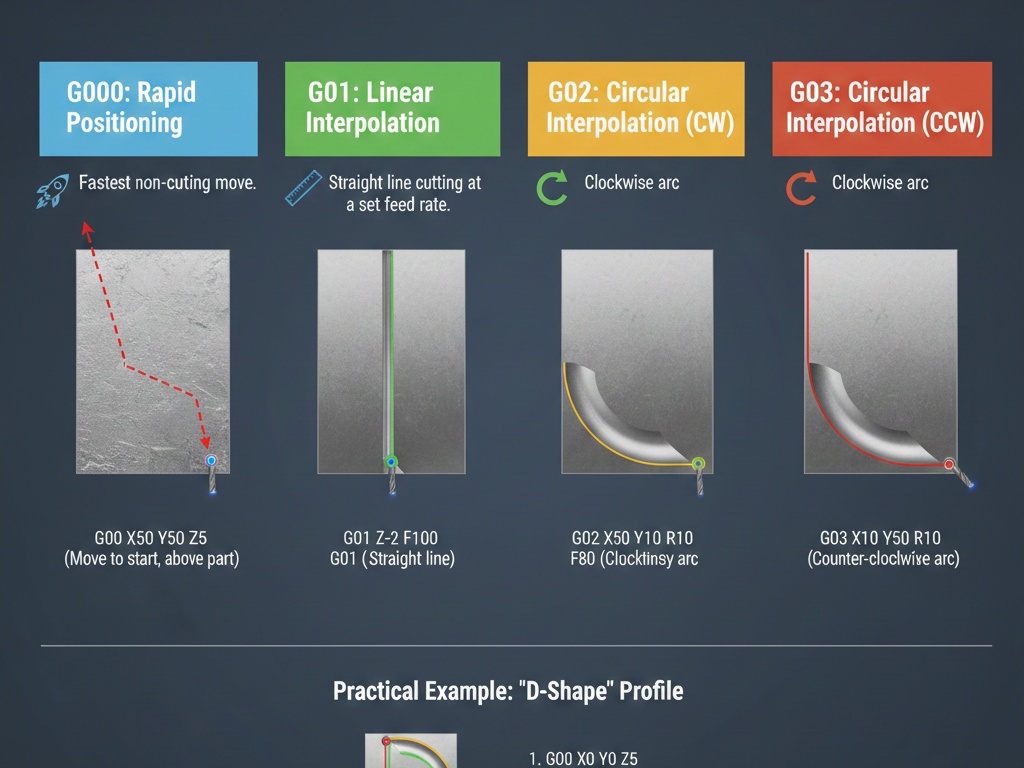
    In the world of CNC (Computer Numerical Control) machining, G-codes are the language that tells a machine exactly how to move. While there are hundreds of codes, the “Big Four”—G00, G01, G02, and G03—handle about 90% of all motion commands. Understanding these is the difference between a perfectly machined part and a broken tool. 1….

    Read More G00, G01, G02, G03 Explained With ExamplesContinue

  • Top 20 G-Codes Every CNC Programmer Should Know
    G-Code & M-Code

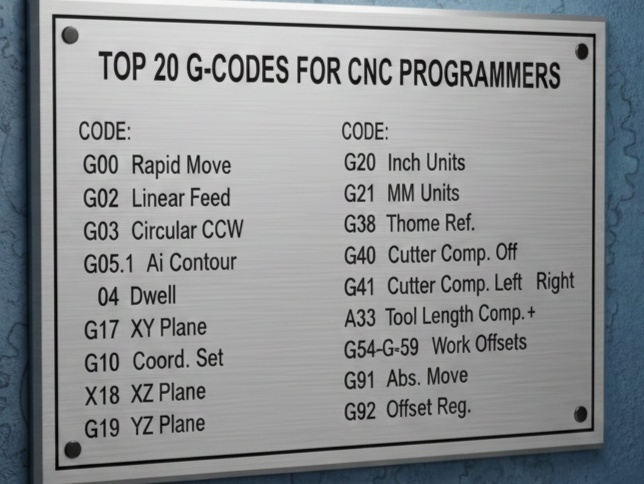
    Top 20 G-Codes Every CNC Programmer Should Know

    ByCNC Hub Team January 14, 2026January 14, 2026

    Mastering G-code is like learning the grammar of manufacturing. While there are hundreds of codes, a small core group does 90% of the heavy lifting in CNC programming. Here is a breakdown of the top 20 G-codes every programmer should have memorized, categorized by their function. 1. Motion Codes (The “Big Three”) These codes tell…

    Read More Top 20 G-Codes Every CNC Programmer Should KnowContinue

  • Difference Between CNC Milling and Turning Machines
    Beginner Guides

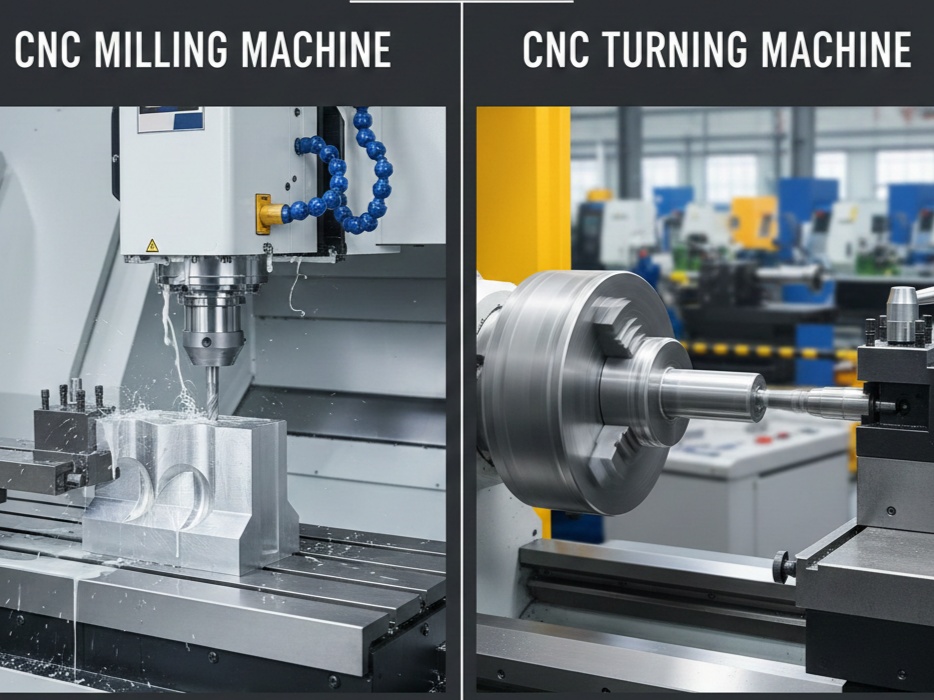
    Difference Between CNC Milling and Turning Machines

    ByCNC Hub Team January 13, 2026January 13, 2026

    In the world of precision manufacturing, CNC (Computer Numerical Control) machines are the workhorses that turn raw materials into intricate components. While both CNC milling and CNC turning are subtractive manufacturing processes—meaning they remove material to create a final shape—they operate on fundamentally different mechanical principles. The primary difference lies in which part moves: In CNC milling,…

    Read More Difference Between CNC Milling and Turning MachinesContinue

  • Fanuc G71 Rough Turning Cycle Example
    Machine-Specific

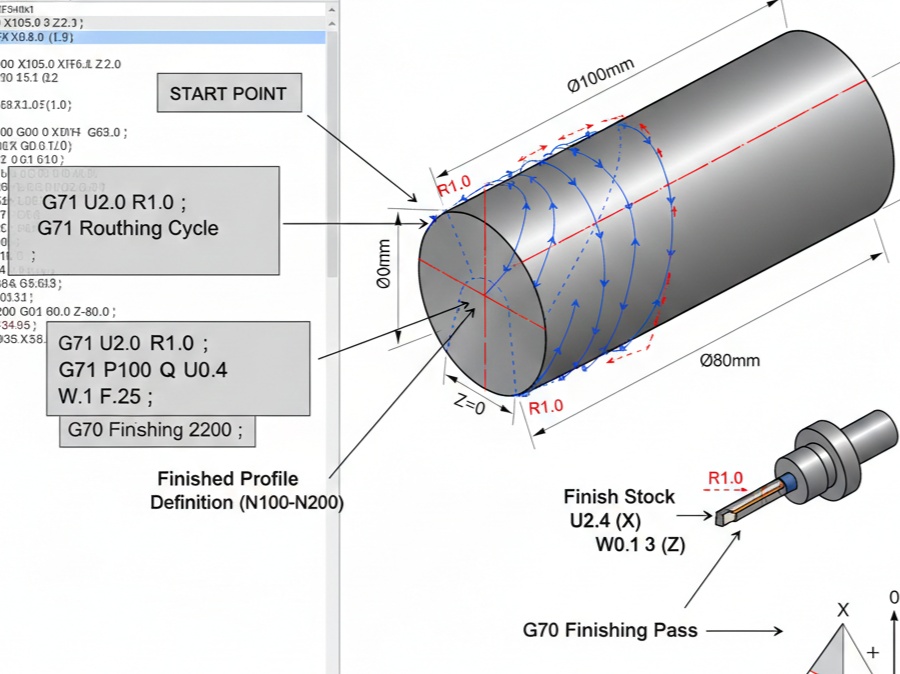
    Fanuc G71 Rough Turning Cycle Example

    ByCNC Hub Team January 13, 2026January 13, 2026

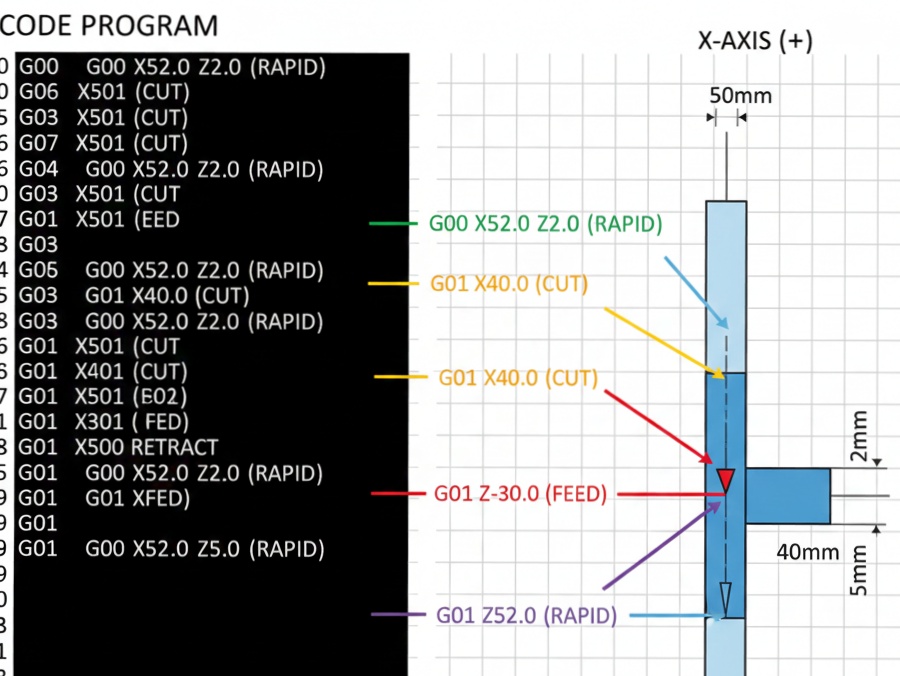
    The G71 Rough Turning Cycle is one of the most powerful and frequently used canned cycles in Fanuc CNC programming. It allows a programmer to define a finished part profile and let the machine automatically calculate the multiple passes required to remove bulk material. Instead of writing dozens of individual G01 lines, you write the profile once….

    Read More Fanuc G71 Rough Turning Cycle ExampleContinue

  • Fanuc CNC Alarm Codes: Comprehensive Guide for Operators
    Machine-Specific

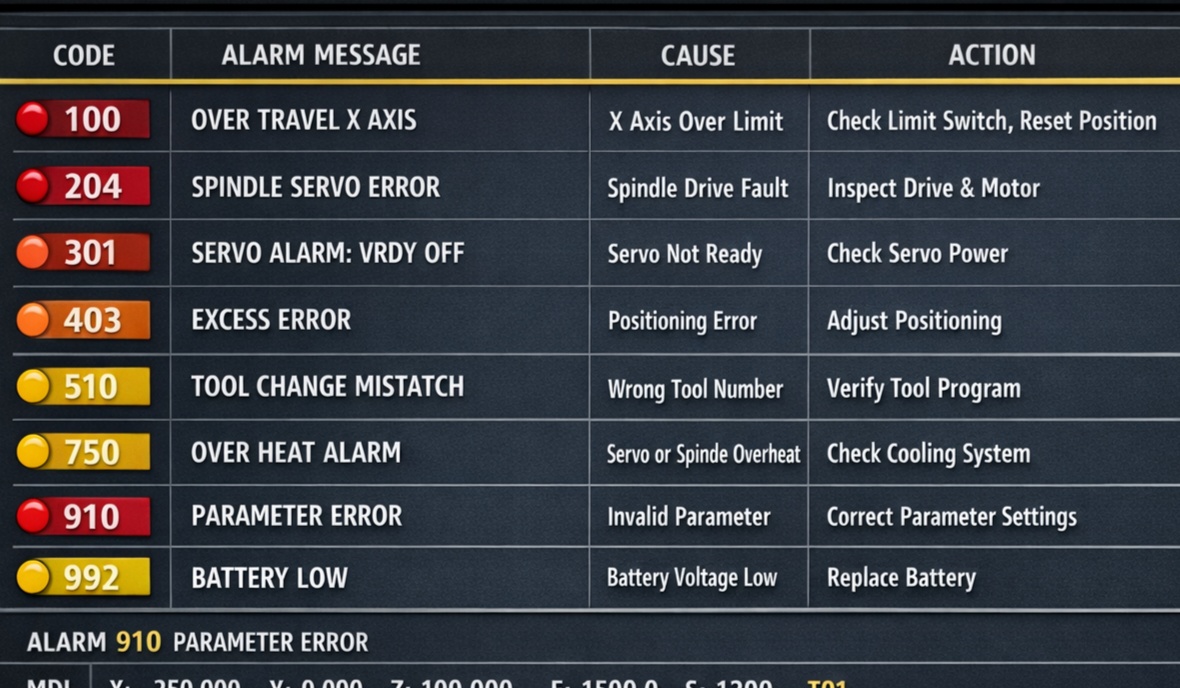
    Fanuc CNC Alarm Codes: Comprehensive Guide for Operators

    ByCNC Hub Team January 12, 2026January 12, 2026

    Fanuc CNC machines are widely used in manufacturing for their precision, reliability, and advanced automation. Like any sophisticated machinery, they are equipped with a comprehensive alarm system that alerts operators to errors, malfunctions, or conditions requiring attention. Understanding Fanuc Alarm Codes is essential for CNC operators, programmers, and maintenance technicians. Each code corresponds to a specific issue,…

    Read More Fanuc CNC Alarm Codes: Comprehensive Guide for OperatorsContinue

  • Most Common CNC Programming Mistakes & How to Fix Them
    Machine-Specific

    Most Common CNC Programming Mistakes & How to Fix Them

    ByCNC Hub Team January 12, 2026September 24, 2026

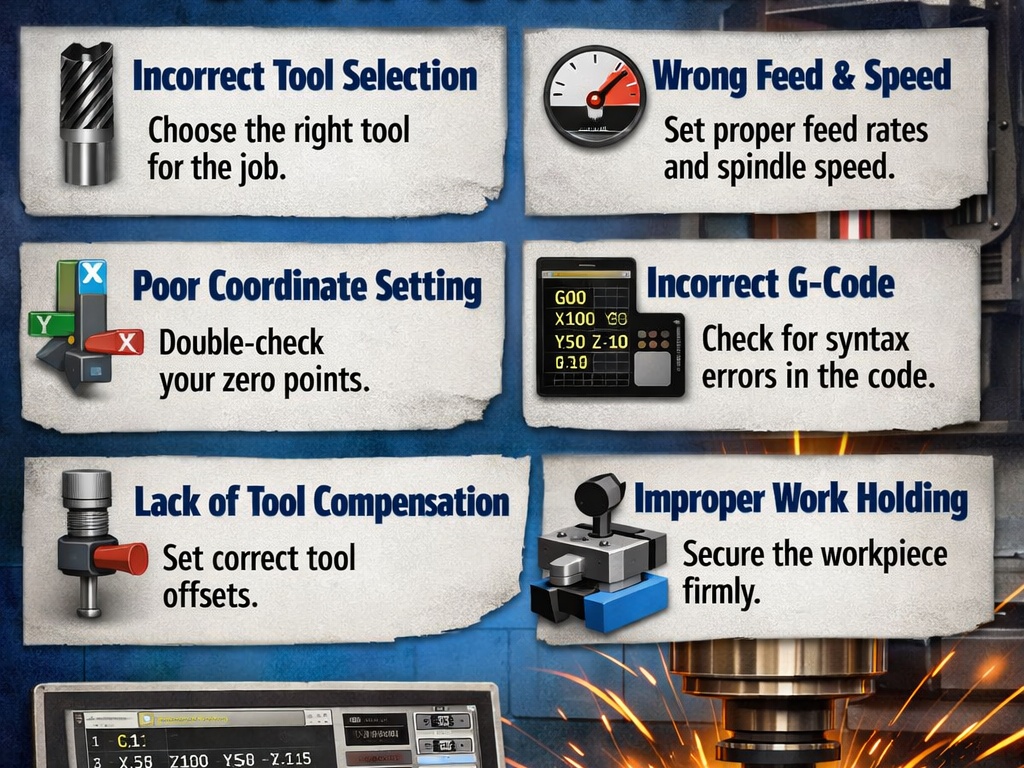
    CNC programming is the bridge between a digital design and a physical part. Even a single character error in a G-code line can lead to scrapped parts, broken tools, or a costly machine crash. Below are the most common CNC programming mistakes and the practical steps to fix them. 1. Syntax and Formatting Errors This…

    Read More Most Common CNC Programming Mistakes & How to Fix ThemContinue

  • What is T0101 in CNC programming?
    Beginner Guides

    What is T0101 in CNC programming?

    ByCNC Hub Team January 12, 2026January 12, 2026

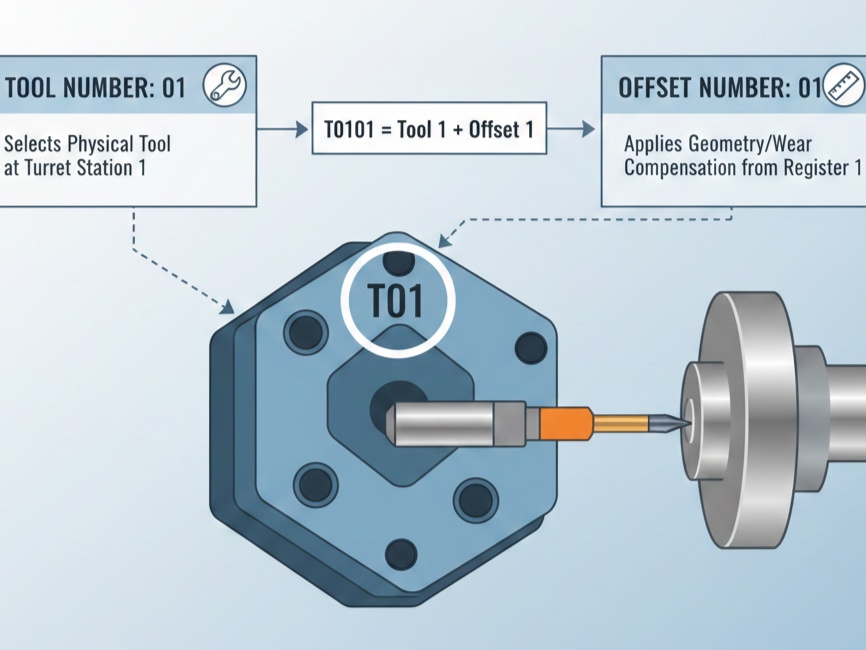
    In CNC programming (specifically for lathes/turning centers), T0101 is a command used to select a specific tool and its associated offset. It is most commonly found in Fanuc, Haas, and similar control systems. The code is typically split into two parts: Why are there four digits? While it is common to see the numbers match (like T0101, T0202, or T0505),…

    Read More What is T0101 in CNC programming?Continue

  • Fanuc CNC Lathe Programming Basics
    Beginner Guides

    Fanuc CNC Lathe Programming Basics

    ByCNC Hub Team January 11, 2026February 15, 2026

    CNC (Computer Numerical Control) lathe programming might seem like learning a foreign language at first, but it follows a very logical structure. Most industrial lathes use Fanuc-style controls, which rely on G-codes (preparatory functions) and M-codes (miscellaneous functions) to tell the machine exactly how to move, spin, and cut. Think of a CNC program as a recipe: you define the…

    Read More Fanuc CNC Lathe Programming BasicsContinue

  • Difference Between G-Code and M-Code (With Examples)
    G-Code & M-Code

    Difference Between G-Code and M-Code (With Examples)

    ByCNC Hub Team January 11, 2026January 11, 2026

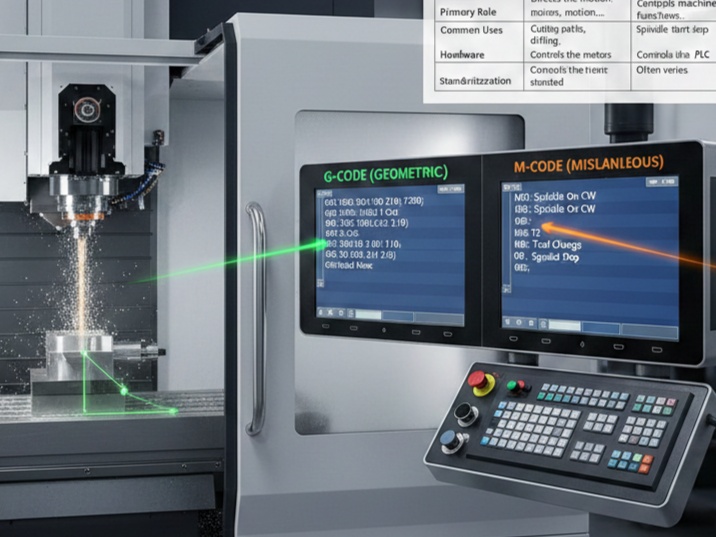
    CNC machines operate with the help of special programming languages that tell the machine what to do, where to move, and how to perform operations. Among these languages, G-Code and M-Code are the most important and commonly used. Many beginners in CNC machining often ask:What is the difference between G-Code and M-Code?Although both are essential, they serve very different purposes in CNC…

    Read More Difference Between G-Code and M-Code (With Examples)Continue

  • Simple Shaft Turning on CNC Lathe: Full G/M-Code Example
    G-Code & M-Code

    Simple Shaft Turning on CNC Lathe: Full G/M-Code Example

    ByCNC Hub Team January 11, 2026January 11, 2026

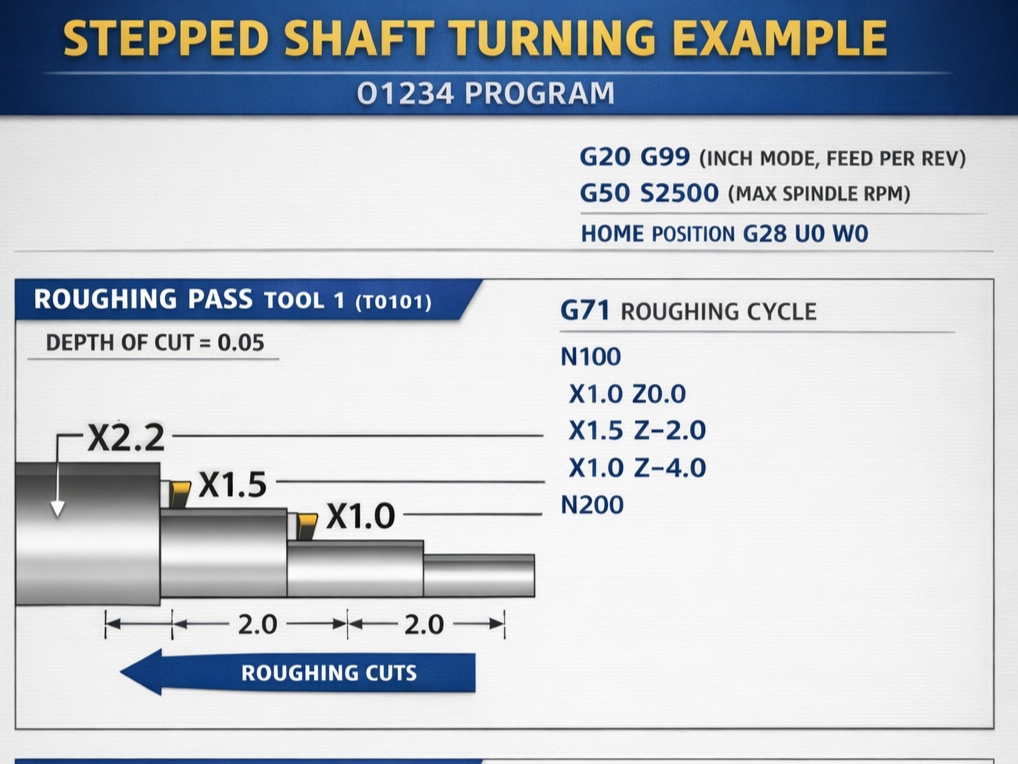
    For this example, we’ll program a basic stepped shaft on a CNC lathe using Fanuc-style G-code. Assume the following specifications: This is a complete, self-contained program. Note that actual code may vary slightly by machine control (e.g., Fanuc, Haas), so test in simulation first. The roughing uses G71 (stock removal cycle), and finishing uses G70…

    Read More Simple Shaft Turning on CNC Lathe: Full G/M-Code ExampleContinue

  • Top 50 G-Codes for CNC Programming
    G-Code & M-Code

    Top 50 G-Codes for CNC Programming

    ByCNC Hub Team January 10, 2026January 11, 2026

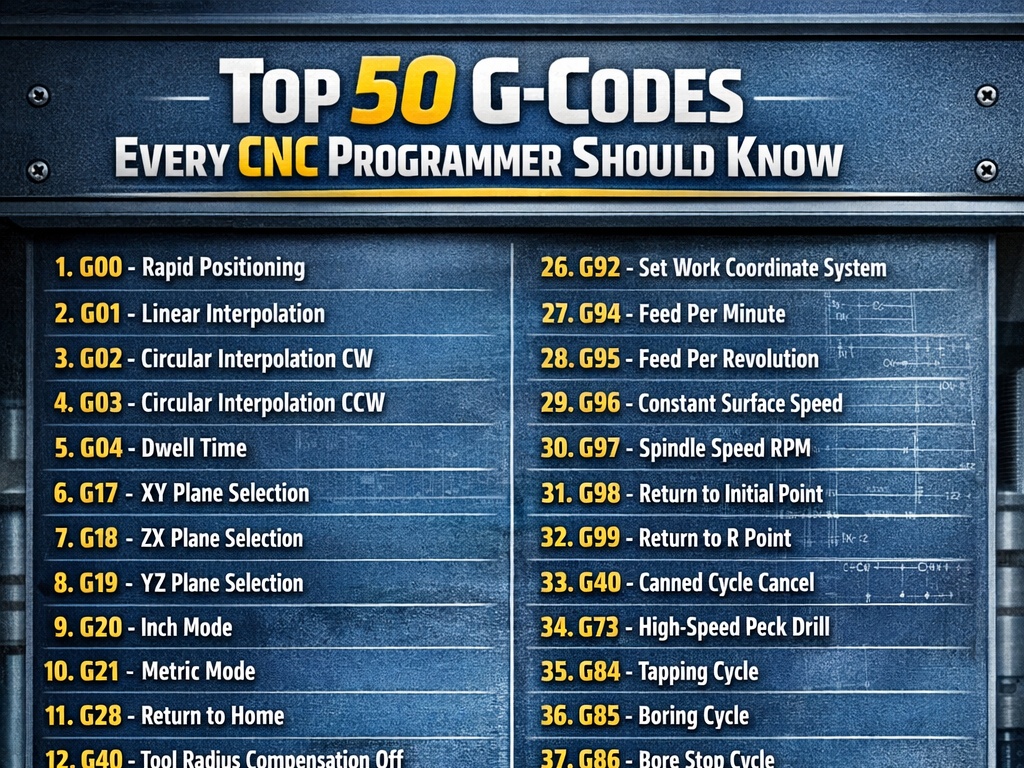
    CNC programmers rely heavily on G-codes to control the movements and operations of a machine. G-codes, or “preparatory codes,” instruct the machine on actions such as linear and circular motion, tool changes, spindle control, and coolant activation. Among the most essential G-codes are G00 for rapid positioning, G01 for linear interpolation, G02 and G03 for…

    Read More Top 50 G-Codes for CNC ProgrammingContinue

  • What is CNC? Understanding the Basics of CNC Machines
    Beginner Guides

    What is CNC? Understanding the Basics of CNC Machines

    ByCNC Hub Team January 10, 2026February 15, 2026

    CNC stands for Computer Numerical Control. It refers to the automated control of machine tools using a computer, where pre-programmed software and code dictate the precise movement and operation of cutting tools, drills, lathes, and other machinery. Unlike traditional manual machining — where operators physically guide tools using handwheels and levers — CNC machining relies…

    Read More What is CNC? Understanding the Basics of CNC MachinesContinue

  • CNC Drilling Cycles: A Comprehensive Overview
    Tutorials

    CNC Drilling Cycles: A Comprehensive Overview

    ByCNC Hub Team January 9, 2026January 9, 2026

    CNC (Computer Numerical Control) drilling cycles, commonly known as canned cycles, represent one of the most powerful features in G-code programming for milling machines. These pre-programmed sequences simplify the creation of repetitive hole-making operations, dramatically reducing programming time and code length while improving consistency, safety, and efficiency. Instead of writing dozens or even hundreds of…

    Read More CNC Drilling Cycles: A Comprehensive OverviewContinue

  • How to Write a Fanuc CNC Program from Scratch
    Machine-Specific

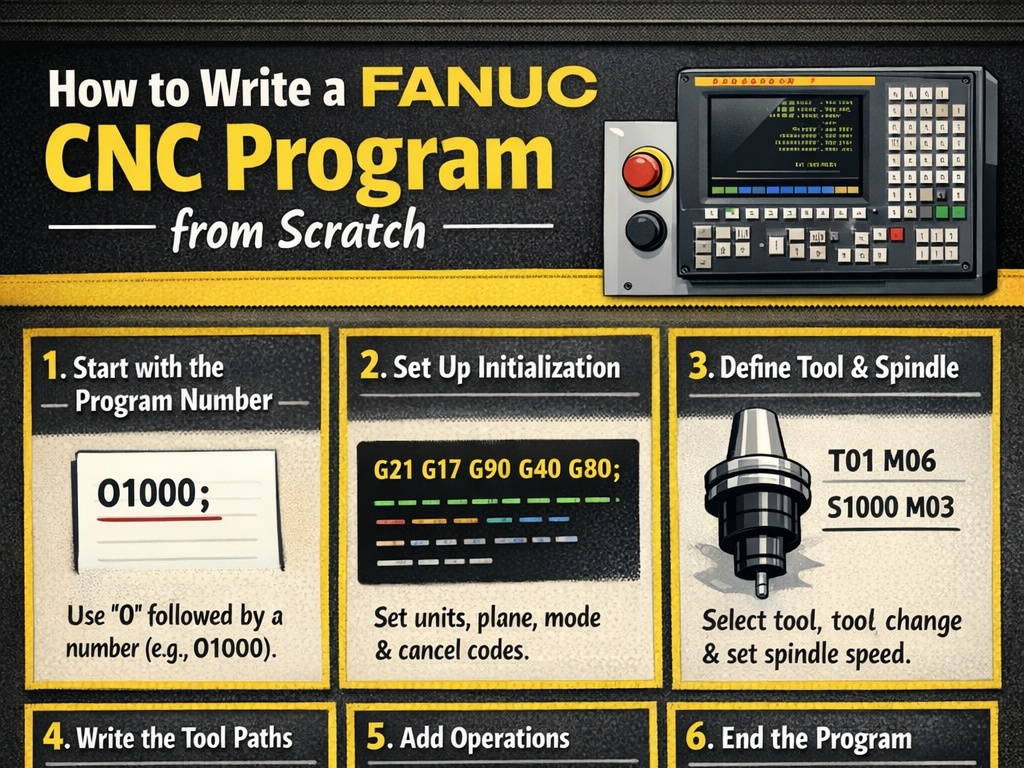
    How to Write a Fanuc CNC Program from Scratch

    ByCNC Hub Team January 9, 2026January 9, 2026

    Fanuc CNC systems are among the most widely used controllers in the world for both milling machines and lathes. Writing a Fanuc CNC program from scratch involves understanding the basic structure, key commands (G-codes and M-codes), coordinate systems, and safety practices. This guide will walk you through the process step by step, focusing on manual…

    Read More How to Write a Fanuc CNC Program from ScratchContinue

  • Fanuc CNC Beginner Guide: Introduction for New Machinists
    Beginner Guides | Machine-Specific

    Fanuc CNC Beginner Guide: Introduction for New Machinists

    ByCNC Hub Team January 8, 2026September 24, 2026

    Fanuc CNC systems are among the most widely used and trusted control systems in the manufacturing industry. If you are new to CNC machining, learning Fanuc is an excellent choice because of its global acceptance, reliability, and long-term career value. This beginner guide will walk you through the basics of Fanuc CNC, its components, fundamental…

    Read More Fanuc CNC Beginner Guide: Introduction for New MachinistsContinue

  • How to Make a CNC Program (Step-by-Step Guide)
    Beginner Guides

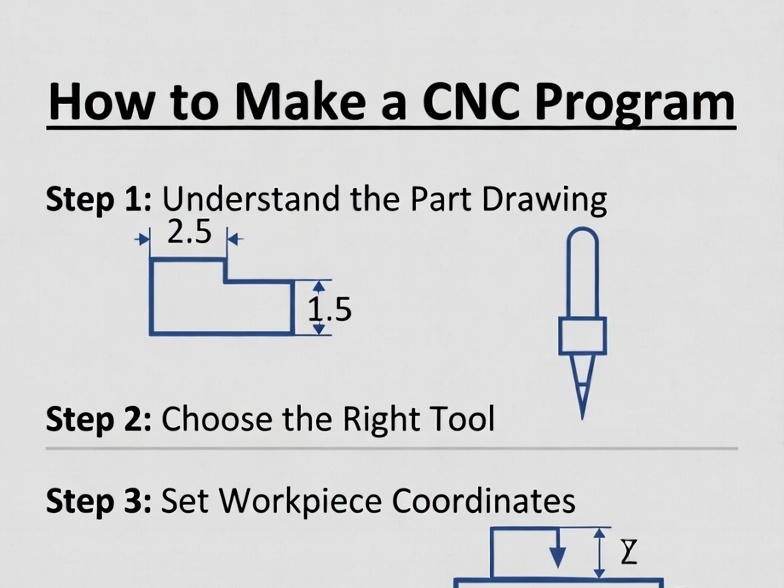
    How to Make a CNC Program (Step-by-Step Guide)

    ByCNC Hub Team January 7, 2026February 15, 2026

    Creating a CNC program is a fundamental skill for anyone working with CNC milling machines, lathes, or machining centers. A CNC (Computer Numerical Control) program tells the machine what to do, where to move, how fast to move, and what operation to perform. Whether you are a beginner or an intermediate machinist, understanding how to…

    Read More How to Make a CNC Program (Step-by-Step Guide)Continue

  • Basic G-Codes Explained with Examples
    G-Code & M-Code

    Basic G-Codes Explained with Examples

    ByCNC Hub Team January 6, 2026January 9, 2026

    G-code, short for “Geometric Code,” is the standard programming language used to control Computer Numerical Control (CNC) machines, such as mills, lathes, routers, and even 3D printers. Developed in the 1950s and standardized as RS-274 (now ISO 6983), it provides precise instructions for tool movement, speed, and machine functions. While modern CAD/CAM software often generates…

    Read More Basic G-Codes Explained with ExamplesContinue

  • Fanuc CNC Beginner Guide: Introduction for New Machinists
    Beginner Guides

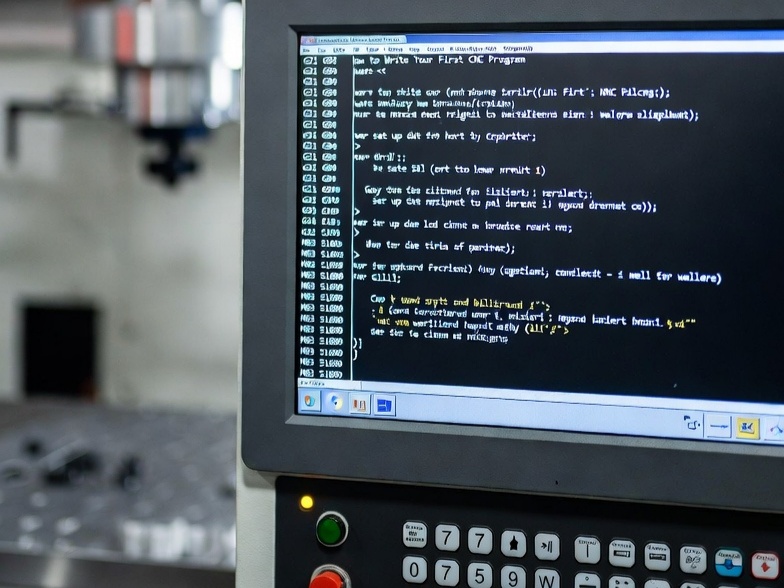
    How to Write Your First CNC Program

    ByCNC Hub Team January 6, 2026January 9, 2026

    Computer Numerical Control (CNC) programming is the cornerstone of modern manufacturing, enabling precise control of machinery such as mills, lathes, routers, and plasma cutters. At its core, CNC programming involves creating a sequence of instructions that dictate the movements, speeds, and operations of a machine tool to fabricate parts from raw materials. This guide is…

    Read More How to Write Your First CNC ProgramContinue

Page navigation

Previous PagePrevious 1 … 17 18 19 20 Next PageNext
  • About Us – CNC Programming Hub
  • Contact Us
  • Privacy Policy

© 2026 CNC Programming Hub

  • Home
  • Beginner Guides
  • G-Code & M-Code
  • Machine-Specific
  • Tutorials
  • Resources & Libraries
Search